Ingredients
Equipment
Method
Mixing the Dough (Autolyse)
- In a large mixing bowl, combine the bread flour, all-purpose flour, and granulated sugar. Add the warm water, leaving about 2 tablespoons aside to add with the salt later. Mix with a spoon or your hand until all the flour is hydrated and no dry spots remain. The dough will be shaggy. Cover the bowl with plastic wrap or a shower cap and let it rest for 30 minutes at room temperature (this is the autolyse phase).
Adding Starter, Salt, and Butter
- After the autolyse, add the active sourdough starter to the dough. Using your hands, gently dimple and squeeze the starter into the dough until fully incorporated. It might feel a bit messy initially.
- Sprinkle the salt over the dough, and pour the reserved 2 tablespoons of water over the salt. Work the salt and water into the dough, squeezing and folding until the salt is dissolved and evenly distributed. This usually takes 3-5 minutes. The dough will start to feel smoother.
- Pour the cooled melted butter over the dough. Work the butter into the dough until fully absorbed. This can take 5-7 minutes of kneading, squishing, and folding. The dough will become very soft and smooth. Once incorporated, transfer the dough to a clean, lightly oiled bowl. Cover and let rest for 30 minutes.
Bulk Fermentation with Stretch & Folds
- Over the next 3-4 hours, perform 3-4 sets of 'stretch and folds'. For each set, lightly wet your hands. Grab a portion of the dough, stretch it upwards, and fold it over itself towards the center. Rotate the bowl and repeat this action 3-4 times until you’ve worked your way around the dough. This builds strength. Cover the bowl and let it rest for 30-45 minutes between each set.
- After the final set of stretch and folds, let the dough rest, covered, for the remainder of the bulk fermentation, usually another 1-2 hours, until it has increased in volume by about 20-30% and feels light and airy.
Shaping the Loaf
- Lightly flour your work surface. Gently turn the dough out onto the surface. Pre-shape the dough into a loose rectangle or oval. Cover with a clean kitchen towel and let it rest for 15-20 minutes.
- Lightly grease a 9x5 inch loaf pan. To shape the loaf, gently flatten the dough into a rectangle. Fold the top third of the dough down towards the center, then fold the bottom third up over the top, like folding a letter. Gently pat down any air bubbles. Then, tightly roll the dough from one end to the other, creating tension on the surface. Pinch the seam closed. Place the shaped dough, seam-side down, into the prepared loaf pan.
Final Proofing
- Cover the loaf pan loosely with plastic wrap or a kitchen towel. Let it proof at room temperature for 2-4 hours, or until it has risen significantly (almost doubled) and feels light and airy. An indentation with a floured finger should slowly spring back (not too quickly, not too slowly). Alternatively, for a deeper flavor and easier handling, you can cold proof it in the refrigerator overnight (8-12 hours).
Baking
- Preheat your oven to 400°F (200°C) with a rack in the center. If desired, score the top of the loaf with a sharp knife or razor blade to allow for controlled expansion.
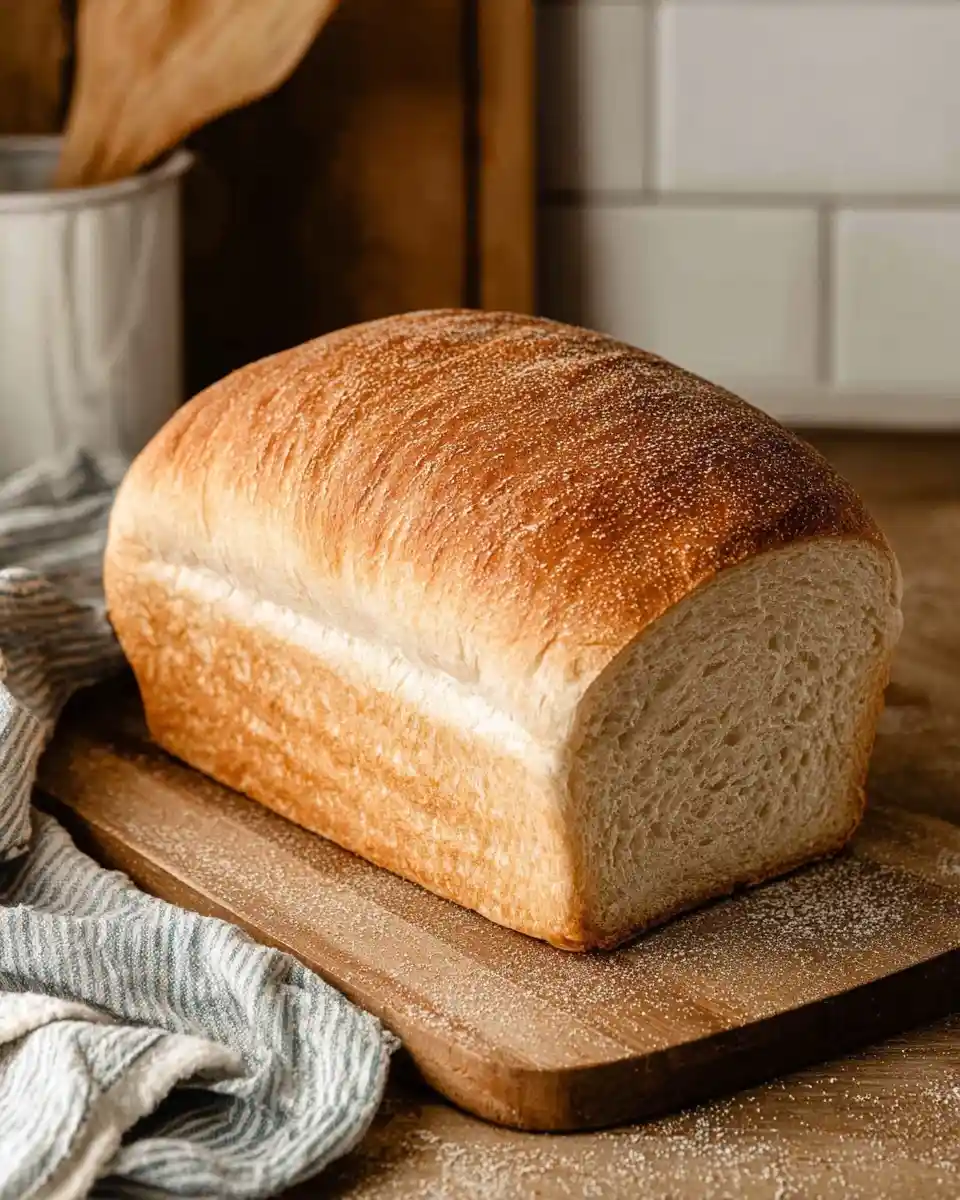
- Place the loaf pan in the preheated oven. Bake for 35-45 minutes, or until the crust is deeply golden brown and the internal temperature reaches 200-210°F (93-99°C) when checked with an instant-read thermometer.
Cooling
- Once baked, immediately remove the bread from the loaf pan and transfer it to a wire rack. Let it cool completely for at least 1.5-2 hours before slicing. Slicing too early can result in a gummy texture.
Notes
While the active prep time is just 45 minutes, remember that sourdough requires significant passive time for bulk fermentation (4-6 hours) and final proofing (2-4 hours at room temp or 8-12 hours in the fridge). Ensure your sourdough starter is very active and bubbly before you begin. For an even softer crumb, you can substitute some of the water with milk. Store leftover bread in an airtight container at room temperature for 3-4 days, or slice and freeze for longer storage.