Ingredients
Equipment
Method
Prepare the Starter & Autolyse
- Ensure your gluten-free sourdough starter is active and ripe. Feed it 4-12 hours before you plan to mix your dough, ensuring it's at its peak — bubbly, doubled in size, and passes the float test (a small spoonful floats in water).
- In a large mixing bowl, combine the warm water and psyllium husk powder. Whisk well and let it sit for 5-10 minutes until it forms a thick gel. This is crucial for gluten-free dough structure.
- Add the active gluten-free sourdough starter to the psyllium gel mixture and mix until well combined.
Mix the Dough
- In a separate bowl, whisk together the brown rice flour, sorghum flour, tapioca starch, potato starch, and fine sea salt until thoroughly combined.
- Add the dry flour mixture to the wet starter-psyllium mixture. Use a sturdy spoon or your hands to mix until all the flour is hydrated and a shaggy dough forms. It will be thick and sticky.
- Cover the bowl with a damp cloth or plastic wrap and let it rest for 30 minutes. This allows the flours to fully hydrate.
Bulk Fermentation & Stretch and Folds
- Perform the first set of stretch and folds: Wet your hands slightly or lightly coat them with olive oil. Gently grab a portion of the dough from the side, stretch it upwards, and fold it over to the center. Rotate the bowl and repeat this 3-4 times until you've gone all around the dough. The dough will feel sticky but should start to gain some elasticity.
- Cover the bowl and let the dough rest for 30-45 minutes.
- Repeat the stretch and fold process three more times, with 30-45 minute rests in between each set. By the final set, the dough should feel smoother, more cohesive, and slightly more resilient.
- After the last set of stretch and folds, cover the bowl and let the dough bulk ferment at room temperature (around 70-75°F / 21-24°C) for 3-6 hours. The exact time will depend on your starter's activity and room temperature. Look for the dough to increase in volume by about 20-30% and show some small bubbles on the surface.
Shape the Dough
- Lightly flour your work surface with gluten-free flour. Gently scrape the dough out of the bowl onto the floured surface. The dough will still be soft and somewhat sticky.
- Pre-shape: Gently pat the dough into a loose circle or rectangle. Then, gently fold the top third down to the center, the bottom third up over that, and then fold in the sides to form a somewhat tight ball or log. Let it rest, seam-side down, for 20 minutes, uncovered, to relax the gluten-free structure.
- Final shape: Lightly flour your hands and the dough. Gently flip the dough seam-side up. Shape it into a taut boule (round) or batard (oval) by using your hands or a dough scraper to create tension on the surface. You want to create a smooth, tight skin on the outside.
Cold Proof
- Generously flour your banneton basket (or a bowl lined with a floured tea towel). Carefully transfer the shaped dough, seam-side up, into the banneton.
- Cover the banneton with plastic wrap or a shower cap and refrigerate for 8-16 hours (or up to 24 hours). Cold proofing develops flavor and makes the dough easier to handle and score.
Bake the Bread
- Preheat your oven to 450°F (232°C) with your Dutch oven inside for at least 30-45 minutes. This ensures the Dutch oven is scorching hot.
- Carefully remove the hot Dutch oven from the oven. Gently invert the cold dough onto a piece of parchment paper. Score the top of the dough with a lame or sharp knife (e.g., a single deep slash or a decorative pattern).
- Using the parchment paper as a sling, carefully lower the dough into the hot Dutch oven. Cover with the lid.
- Bake covered for 30 minutes.
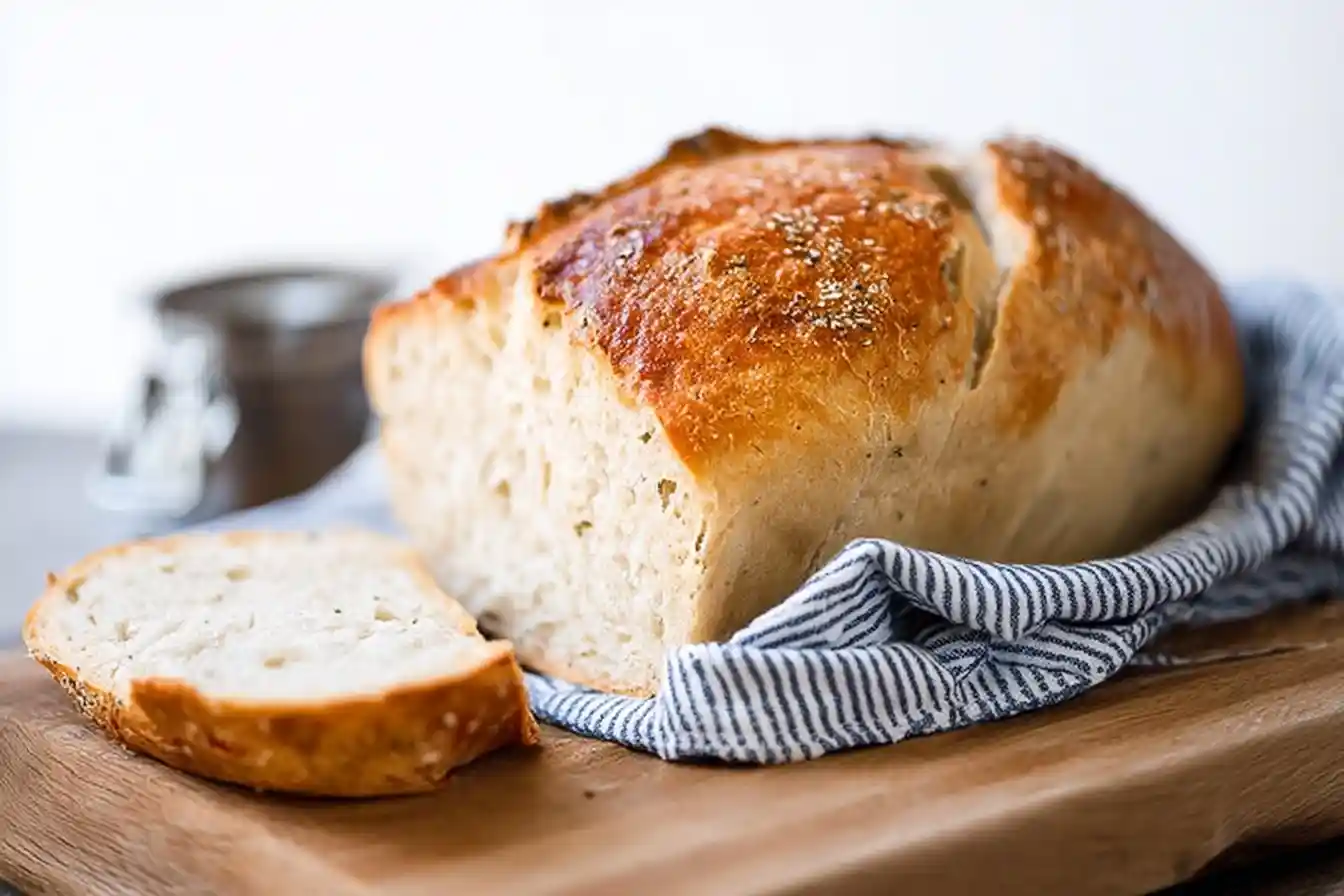
- Remove the lid and continue baking for another 20-25 minutes, or until the crust is a deep golden brown and sounds hollow when tapped on the bottom. An internal temperature of 200-210°F (93-99°C) is ideal.
- Carefully remove the loaf from the Dutch oven and transfer it to a wire rack to cool completely for at least 2-3 hours before slicing. Slicing too early will result in a gummy texture.
Notes
Maintaining a strong, active gluten-free sourdough starter is key to success. Ensure your starter is consistently fed and active. Room temperature plays a significant role in fermentation times; colder rooms will require longer bulk fermentation. Don't be afraid to experiment and adjust times based on your environment and starter's behavior. Store cooled bread at room temperature in a breathable bag for up to 2-3 days, or slice and freeze for longer storage.