Ingredients
Equipment
Method
Activate the Yeast
- In a large mixing bowl (or stand mixer bowl), combine the warm water, yeast, and honey/maple syrup. Stir gently and let it sit for 5-10 minutes until foamy. This indicates the yeast is active.
Mix the Dough
- To the foamy yeast mixture, add 2 cups of the freshly milled whole wheat flour, salt, and 2 tablespoons of the olive oil/melted butter. Mix with a wooden spoon or a stand mixer with a dough hook until well combined, forming a shaggy dough.
- Gradually add the remaining 2 cups of flour, about 1/2 cup at a time, mixing thoroughly after each addition until a soft, slightly sticky dough forms. You may not need all the flour, or you might need a tiny bit more, depending on your flour's absorption. Freshly milled flour can vary.
Knead the Dough
- Turn the dough out onto a lightly floured surface (if kneading by hand) or continue kneading in the stand mixer with the dough hook on medium-low speed. Knead for 8-10 minutes until the dough is smooth, elastic, and passes the windowpane test (a small piece can be stretched thinly enough to see light through without tearing). If the dough is too sticky, add a very small amount of flour; if too stiff, add a teaspoon of water.
First Rise (Bulk Fermentation)
- Lightly grease a clean large bowl with the remaining olive oil/butter. Place the dough in the bowl, turning once to coat. Cover the bowl tightly with plastic wrap or a clean kitchen towel and let it rise in a warm, draft-free place for 60-90 minutes, or until doubled in size. Fresh milled flour can sometimes rise a bit faster or slower.
Shape the Loaf
- Gently punch down the risen dough to release the air. Turn it out onto a lightly floured surface. Flatten the dough into a rectangle, approximately 9x12 inches. Starting from one of the longer sides, tightly roll up the dough into a log. Pinch the seam closed and tuck the ends under to create a smooth, taut loaf.
Second Rise (Proofing)
- Lightly grease a 9x5 inch loaf pan. Place the shaped dough seam-side down into the prepared pan. Cover loosely with plastic wrap or a kitchen towel and let it rise again in a warm place for 30-45 minutes, or until the dough has risen about 1 inch above the rim of the pan and looks puffy.
Bake the Bread
- While the dough is on its second rise, preheat your oven to 375°F (190°C). If desired, brush the top of the risen loaf with a little milk or melted butter for a softer crust, or water for a crisper crust.
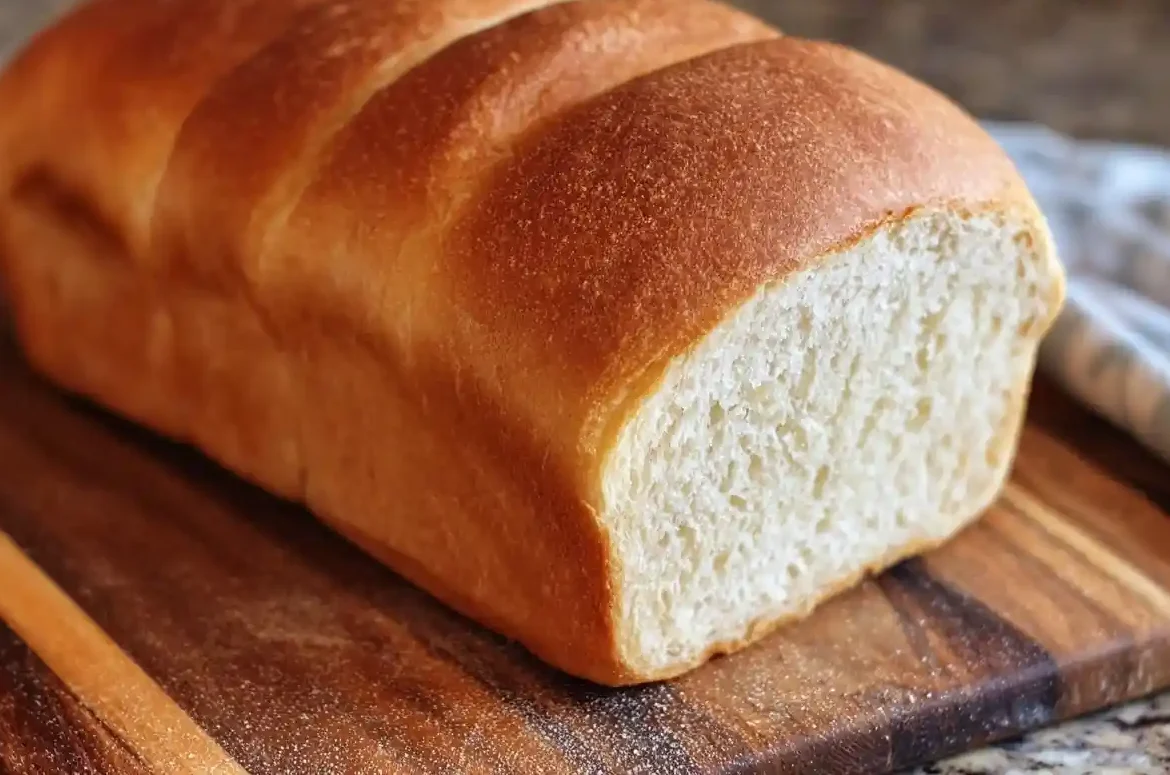
- Bake for 35-40 minutes, or until the crust is golden brown and the internal temperature reaches 200-210°F (93-99°C) when measured with an instant-read thermometer. If the top is browning too quickly, you can loosely tent it with aluminum foil.
- Remove the bread from the oven and immediately turn it out onto a wire rack to cool completely before slicing. This prevents the bottom from getting soggy and ensures a good texture. Cooling can take 1-2 hours.
Notes
Using freshly milled flour results in a more nutritious and flavorful bread, but it can behave differently than store-bought flour. It absorbs liquid slower initially but can become stickier. Adjust flour/water slightly as needed. For best results, use hard red wheat for a stronger crumb or hard white wheat for a milder flavor and slightly lighter crumb. Store cooled bread in an airtight container at room temperature for up to 3-4 days, or slice and freeze for longer storage.