Ingredients
Equipment
Method
Mix the Dough
- In a large mixing bowl, combine the sourdough discard and warm water. Stir with a spatula or whisk until the discard is mostly dissolved.
- Add the flour and salt. Mix with a spatula until just combined and no dry flour streaks remain. The dough will be shaggy and sticky. Do not overmix.
Bulk Fermentation (First Rise)
- Lightly grease another large bowl (or the same one if you transfer it) with olive oil. Transfer the dough to the greased bowl, cover it tightly with plastic wrap or a damp kitchen towel.
- Let it rest at room temperature (68-75°F / 20-24°C) for 4-8 hours. The dough should become noticeably bubbly, slightly puffy, and have some air pockets. The exact time depends on your room temperature and the activity of your discard; warmer temperatures will shorten the time.
Shape the Dough
- Lightly flour your work surface.
- Gently scrape the dough out onto the floured surface. Fold the edges of the dough towards the center to create a round or oval shape. Using a dough scraper, gently cup and turn the dough to build surface tension, forming a loose boule. Avoid degassing the dough too much.
Proofing (Second Rise)
- Line your Dutch oven with parchment paper, leaving generous overhang on the sides. Alternatively, you can place the dough in a floured proofing basket (banneton) or a bowl lined with a floured towel.
- Carefully transfer the shaped dough into the parchment-lined Dutch oven (or banneton). Cover the Dutch oven (or banneton) and refrigerate for at least 2 hours or preferably overnight (8-12 hours). Cold proofing develops flavor and makes the dough easier to handle.
Bake the Bread
- About 45-60 minutes before baking, place your Dutch oven (with the lid on) into the cold oven. Preheat the oven to 450°F (230°C). Allow the Dutch oven to preheat completely with the oven.
- Once the oven and Dutch oven are fully preheated, carefully remove the hot Dutch oven from the oven. If your dough was in a banneton, gently invert it into the hot Dutch oven. If already in the Dutch oven, score the top of the dough with a sharp knife or razor blade (a single slash or cross pattern). Replace the lid and bake for 30 minutes.
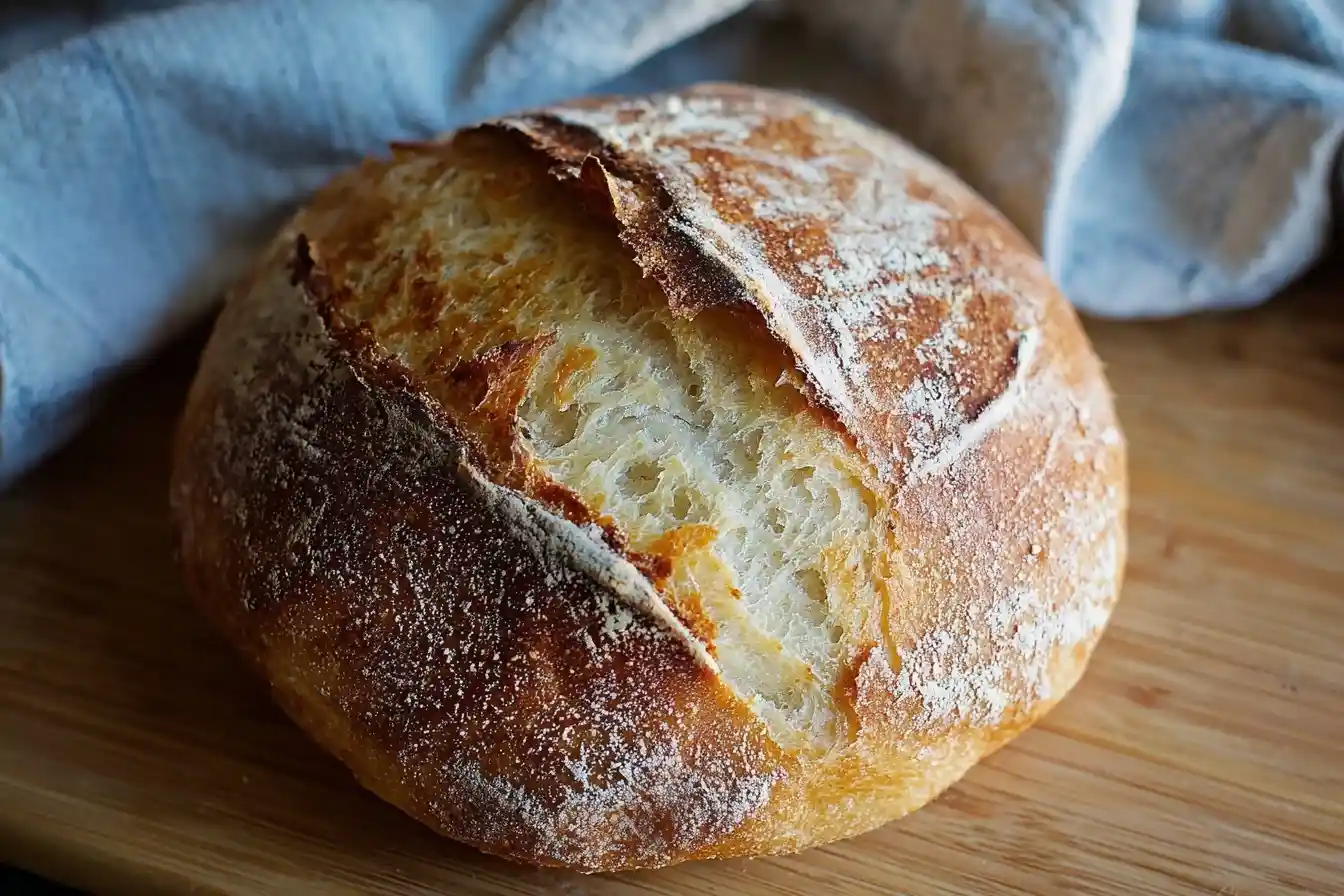
- After 30 minutes, carefully remove the lid from the Dutch oven. Reduce the oven temperature to 425°F (220°C) and continue baking for another 15-20 minutes, or until the crust is deeply golden brown and sounds hollow when tapped on the bottom.
- Carefully remove the bread from the Dutch oven using the parchment paper overhang and transfer it to a wire cooling rack. Allow the bread to cool completely for at least 1-2 hours before slicing. Slicing too early can result in a gummy texture.
Notes
Sourdough Discard: This recipe uses unfed discard straight from the fridge. The older the discard, the more sour the flavor may be. If your discard is very thin, you might need a tiny bit less water.
Flour: All-purpose flour works great, but bread flour will give a slightly chewier crumb and higher rise due to its higher protein content.
Humidity: Adjust water slightly based on your environment's humidity and flour absorption. If dough feels too dry, add a tablespoon more water; if too wet, a tablespoon more flour.
Storage: Store cooled bread in a paper bag at room temperature for 2-3 days, or in an airtight container for longer. For longer storage, slice and freeze the bread, then toast slices as needed.
Flour: All-purpose flour works great, but bread flour will give a slightly chewier crumb and higher rise due to its higher protein content.
Humidity: Adjust water slightly based on your environment's humidity and flour absorption. If dough feels too dry, add a tablespoon more water; if too wet, a tablespoon more flour.
Storage: Store cooled bread in a paper bag at room temperature for 2-3 days, or in an airtight container for longer. For longer storage, slice and freeze the bread, then toast slices as needed.