Ingredients
Equipment
Method
Preparation
- Remove the rib roast from the refrigerator at least 1-2 hours before cooking to allow it to come closer to room temperature. This promotes more even cooking.
- Pat the roast dry thoroughly with paper towels. A dry surface helps achieve a better sear.
- In a small bowl, combine the olive oil, chopped fresh rosemary, fresh thyme leaves, minced garlic, coarse sea salt, and black pepper. Mix well to form a paste.
- Rub this aromatic mixture evenly over all surfaces of the rib roast, ensuring good coverage.
Cooking the Roast
- Preheat your oven to 450°F (232°C). Place the seasoned rib roast, fat-side up, on a rack in a shallow roasting pan.
- Roast at 450°F (232°C) for 15-20 minutes, or until the exterior is nicely browned and seared. This high-heat blast creates a delicious crust.
- Reduce the oven temperature to 325°F (163°C). Continue to roast for another 60-90 minutes, or until a meat thermometer inserted into the thickest part of the roast (without touching bone) reaches your desired internal temperature. The exact time will depend on your oven and the roast's starting temperature.
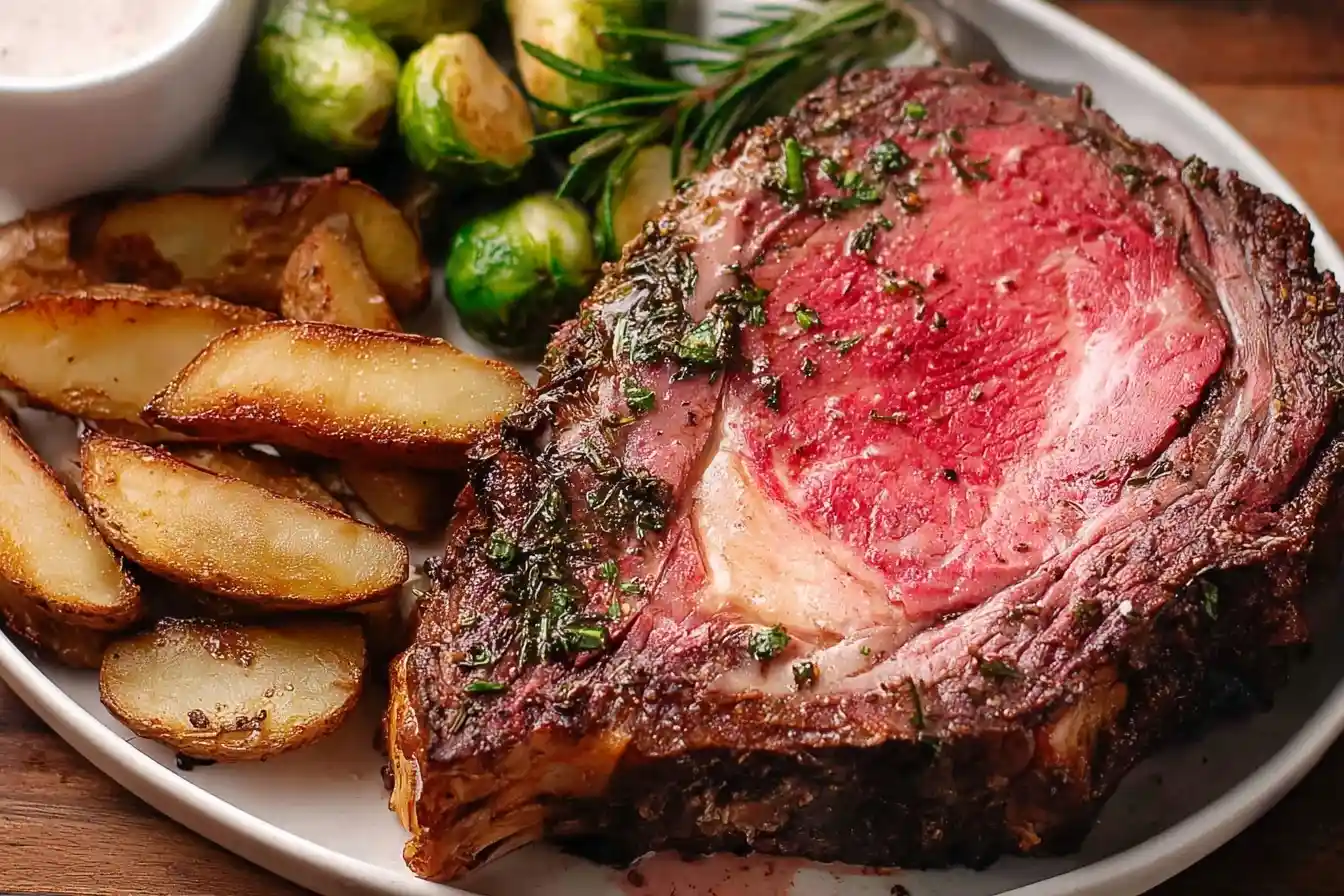
- Desired internal temperatures (keep in mind the temperature will rise during resting): * For Rare: 120-125°F (49-52°C) * For Medium-Rare: 130-135°F (54-57°C) - Recommended * For Medium: 135-140°F (57-60°C)
Resting and Serving
- Once the roast reaches the desired temperature, remove it from the oven. Transfer it to a cutting board, tent loosely with foil, and let it rest for at least 15-20 minutes before carving. This crucial step allows the juices to redistribute throughout the meat, resulting in a more tender and juicy roast. The internal temperature will also rise another 5-10°F during resting.
- Carve the roast by slicing between the bones, then thinly slicing the meat off the bones. Serve immediately and enjoy your perfectly cooked standing rib roast!
Notes
Bringing the roast to room temperature is essential for even cooking and a consistent internal temperature. Do not skip the resting step – it’s just as important as the cooking itself for a juicy outcome. For extra flavor, you can place some roughly chopped onions, carrots, and celery in the bottom of the roasting pan; they will infuse the pan drippings with additional aroma and can be used to make a simple pan sauce.