
Oh, sweet friends, gather ’round! Today, we’re diving into the heart of classic cooking with a foundational Espagnole Sauce Recipe. This isn’t just any sauce; it’s a brown mother sauce, rich and deeply flavorful, the kind that transforms simple dishes into something truly extraordinary. Imagine a silky, glossy base that hums with savory notes, ready to elevate everything from roasted meats to elegant stews. It’s a testament to how a bit of patience and love can turn humble ingredients into pure culinary magic.
I remember countless afternoons in my grandmother’s kitchen, the air thick with the scent of simmering delights. While her specialty was always apple pie, she taught me the importance of a good foundation, a lesson I carried with me through years of baking triumphs and even a few delightful ‘experiments.’ Creating a beautiful sauce, just like baking a perfect cake, is all about understanding the rhythm of the ingredients and trusting your instincts.
This Espagnole Sauce Recipe might seem intimidating at first glance, but I promise it’s incredibly rewarding. It’s perfect for those chilly evenings when you crave warmth and depth in your cooking, and it’s a wonderful way to impress your dinner guests with a truly homemade touch. My top tip for any aspiring home chef? Enjoy the process, savor the aromas, and let your kitchen fill with love!
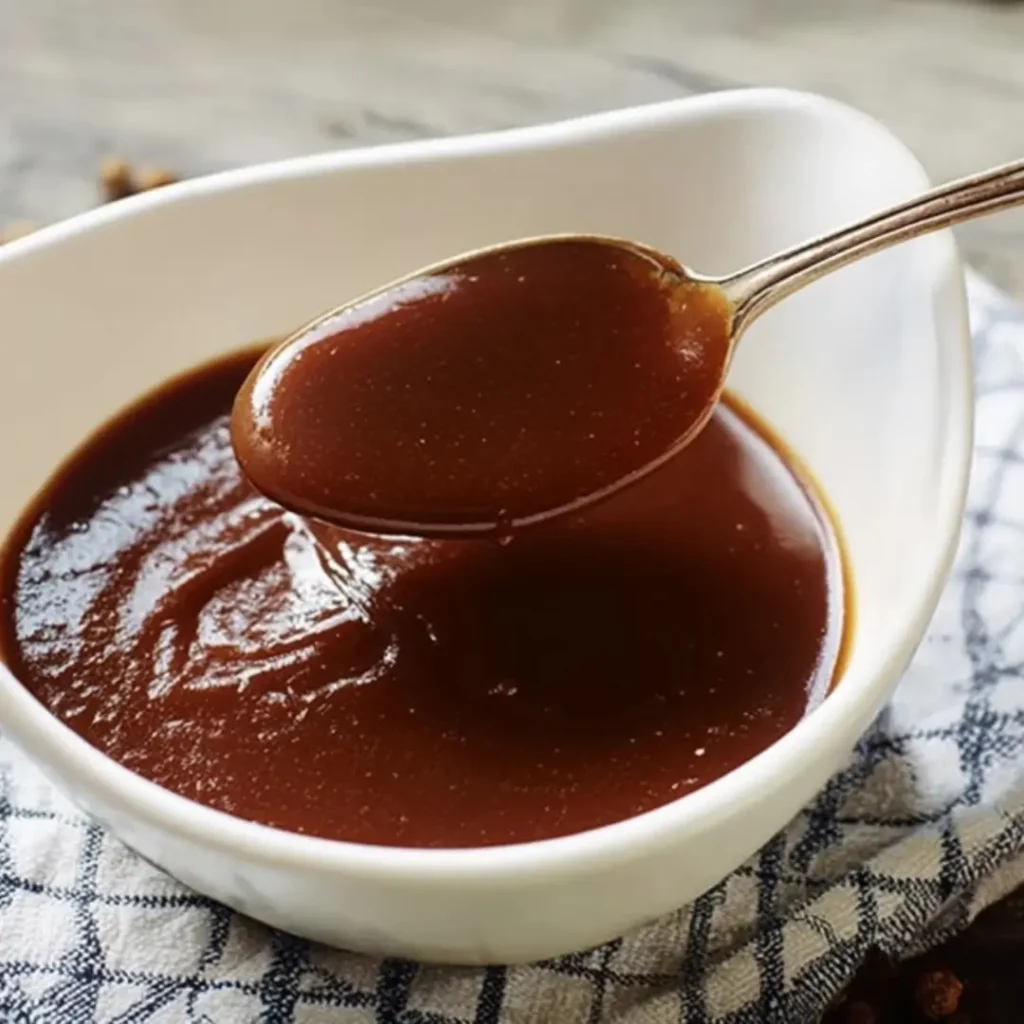
What You Need to Make This Recipe
Crafting this rich brown sauce starts with a thoughtful selection of ingredients. We’ll lean on the aromatic power of a classic mirepoix – yellow onion, carrot, and celery – beautifully sautéed in olive oil with savory pancetta. These foundational flavors, combined with a rich brown stock, are what truly define this classic Espagnole Sauce Recipe. The full list and precise measurements are waiting for you in the recipe card below!
How to Make Espagnole Sauce Recipe
Making this elegant sauce is a journey of layers, beginning with preparing your mirepoix and creating a flavorful base. Next, you’ll embark on making a dark, rich roux, which is the heart of its body and color. Then, we gently combine all our ingredients for a long, slow simmer, allowing the flavors to meld beautifully. After a patient period of simmering and skimming, the sauce is strained, leaving you with a smooth, luxurious foundation for countless culinary creations.

Classic Espagnole Sauce Recipe (Brown Mother Sauce)
Ingredients
Equipment
Method
- If using pancetta/salt pork, add it to a large, heavy-bottomed stockpot over medium heat. Render until crispy, about 8-10 minutes. Remove the crispy bits (can be used as garnish elsewhere) and leave the rendered fat in the pot. If omitting pancetta, add the olive oil directly to the pot.
- Add the diced onion, carrot, and celery (mirepoix) to the pot. Sauté over medium heat, stirring occasionally, until the vegetables are softened and lightly caramelized, about 10-15 minutes. This step is crucial for developing deep flavor.
- Stir in the tomato paste and cook for 2-3 minutes, stirring constantly. This process, known as ‘pincage’, deepens the color and concentrates the flavor of the tomato paste.
- In a separate heavy-bottomed saucepan, melt the unsalted butter over medium-low heat.
- Gradually whisk in the all-purpose flour, ensuring no lumps. Continue to cook, stirring constantly with a wooden spoon or whisk, for 15-20 minutes until the roux achieves a deep, dark peanut butter color. Be very careful not to burn it, as burnt roux will impart a bitter taste.
- Gradually whisk the warm brown stock into the dark roux until smooth and fully incorporated. Bring this mixture to a gentle simmer.
- Pour the roux-stock mixture into the stockpot with the cooked mirepoix and tomato paste. Whisk well to combine all ingredients.
- Prepare a sachet d’épices by tying the bay leaves, peppercorns, dried thyme, and parsley stems in a small piece of cheesecloth. Add the sachet to the pot (or simply add the spices directly if you don’t mind straining them out later).
- Bring the sauce to a bare simmer over low heat. Maintain a gentle simmer, not a rolling boil, to prevent clouding and scorching, and to allow flavors to meld slowly.
- Simmer for at least 2 to 3 hours, or up to 4 hours, stirring occasionally to prevent sticking to the bottom of the pot.
- Throughout the simmering process, use a ladle or spoon to regularly skim any fat and impurities (scum) that rise to the surface. This step is crucial for achieving a clear, clean-tasting sauce.
- Once the sauce has cooked sufficiently and reduced to your desired consistency (it should be thick enough to coat the back of a spoon), remove it from the heat.
- Carefully remove and discard the sachet d’épices (if used).
- Pass the sauce through a fine-mesh sieve or chinois into a clean container, pressing on the solids with a ladle to extract all the liquid and flavor. Discard the strained solids.
- Season the strained Espagnole sauce with salt and freshly ground black pepper to taste. If it’s too thick, you can thin it with a little more warmed stock. If too thin, gently reduce it further over low heat until the desired consistency is achieved.
Notes
Mastering this foundational sauce is incredibly satisfying, and with a few of my go-to tricks, your Espagnole Sauce Recipe will be nothing short of magnificent.
My Secret Trick: When making the roux, I always toast the flour and butter slowly over medium-low heat. It takes a little longer, but this gentle cooking develops a deeper, nuttier flavor and ensures an even, rich brown color without burning. Patience truly is a virtue here!
I always recommend using the highest quality brown stock you can find, or better yet, make your own if you have the time. The stock is the backbone of your Espagnole sauce, and its quality directly impacts the final depth of flavor.
Don’t rush the simmering process! The stated 180 minutes of cook time is there for a reason. This long, gentle simmer allows all the flavors to truly meld and develop, reducing the sauce to its intense, concentrated best. Skim any impurities that rise to the surface diligently for a clearer, cleaner final product.
Finally, after straining, pressing down on the solids in the sieve helps extract every last drop of flavorful liquid. This little step ensures you capture all the essence for your delicious Espagnole Sauce Recipe.
Fun Variations for Espagnole Sauce Recipe
While the classic Espagnole Sauce Recipe is a masterpiece on its own, sometimes it’s fun to explore little twists! My sister, ever the adventurous cook, once added a hint of smoked paprika for an earthier, deeper flavor profile, which was surprisingly delightful with roasted chicken.
For a slightly richer, almost game-like undertone, you could try incorporating a touch of red wine into your mirepoix as it sautés. Just deglaze the pan after the vegetables are tender, letting it reduce fully before adding the stock. It adds a sophisticated layer that a friend of mine adores with beef dishes.
Another wonderful variation involves infusing the sauce with different herbs. While bay leaves and thyme are classic, a small sprig of fresh rosemary during the final simmer can lend a beautiful aroma, especially if you plan to serve the sauce with lamb. Just remember to remove it before straining!
What to Serve With Espagnole Sauce Recipe
Once you’ve poured your heart into creating this rich Espagnole Sauce Recipe, you’ll be wondering how to best showcase its magnificent flavor. It’s incredibly versatile! I love it most with hearty dishes that can truly stand up to its depth.
- Roasted Meats: Drizzle it generously over a perfectly roasted beef tenderloin or a succulent pork loin. The sauce creates a luxurious complement to the savory meat.
- Mashed Potatoes: A simple mound of creamy mashed potatoes becomes an elegant side dish with a spoonful or two of this brown sauce. It’s a comforting pairing my mom always insists on when we have a special roast.
- Vegetables: Elevate steamed green beans or asparagus by lightly coating them with this rich sauce for an extra layer of flavor. It’s a quick way to make weeknight vegetables feel a little more special.
- Shepherd’s Pie: Use it as the flavorful base for the ground meat filling in a classic Shepherd’s Pie. It adds incredible richness that takes the dish to a whole new level.
How to Store Espagnole Sauce Recipe
After all your hard work, ensuring your Espagnole Sauce Recipe stays fresh and delicious is key! Properly stored, this sauce can be a fantastic make-ahead component for many meals.
Fridge Storage
Once cooled completely, transfer your Espagnole sauce to an airtight container. It will keep beautifully in the refrigerator for up to 3-4 days. I like to store cakes in airtight containers to keep them moist, and the same principle applies here to prevent any skin from forming on the surface of your sauce.
Freezer Tips
For longer storage, this sauce freezes wonderfully. Pour the cooled sauce into freezer-safe containers or even ice cube trays for individual portions. Once frozen, you can transfer the cubes to a freezer bag. It will maintain its quality for up to 3 months. To reheat, simply thaw in the refrigerator overnight and gently warm on the stovetop over low heat, stirring occasionally.
Nutritional Benefits
While this Espagnole Sauce Recipe is celebrated for its indulgent flavor, it’s also built upon wholesome ingredients. The mirepoix of onion, carrot, and celery provides essential vitamins and fiber, contributing a surprising nutrient boost to this savory creation. It’s a wonderful example of how even a rich, comforting sauce can be both satisfying and nourishing when crafted from simple, real ingredients.
FAQs
Faq 1
What exactly is Espagnole Sauce?
Espagnole Sauce is one of the five French “mother sauces,” a rich brown sauce thickened with a dark roux. It’s known for its deep, savory flavor, made from brown stock, roasted mirepoix, tomato paste, and aromatics, serving as a base for many derivative sauces and dishes.
Faq 2
Can I make Espagnole Sauce ahead of time?
Absolutely! This Classic Espagnole Sauce Recipe is perfect for making in advance. Its flavors actually deepen and meld even more beautifully after a day or two in the refrigerator, making it an excellent component for meal prep or entertaining.
Faq 3
What is the difference between Espagnole and Demi-Glace?
Espagnole is a mother sauce, a base for many others. Demi-Glace is a derivative sauce made by combining Espagnole sauce with brown stock, then reducing it by half until it’s thick and intensely flavored. So, Espagnole is the foundation, and Demi-Glace is a more concentrated, refined version.
Faq 4
What if my Espagnole Sauce is too thick or thin?
If your Espagnole Sauce Recipe is too thick, simply whisk in a little more warm brown stock until it reaches your desired consistency. If it’s too thin, you can simmer it gently to reduce it further, or whisk in a small beurre manié (equal parts butter and flour kneaded together) for gradual thickening.
Conclusion
Creating a classic like this Espagnole Sauce Recipe is a true joy, a journey that transports you straight to the heart of traditional cooking. It’s a testament to the fact that with a little time, love, and quality ingredients, you can bring incredible depth and flavor to your home kitchen. So, I encourage you, my sweet friends, to tie on your aprons, gather your ingredients, and embrace the magic of making this foundational sauce. It’s more than just a recipe; it’s an opportunity to create delicious memories, one spoonful at a time.