
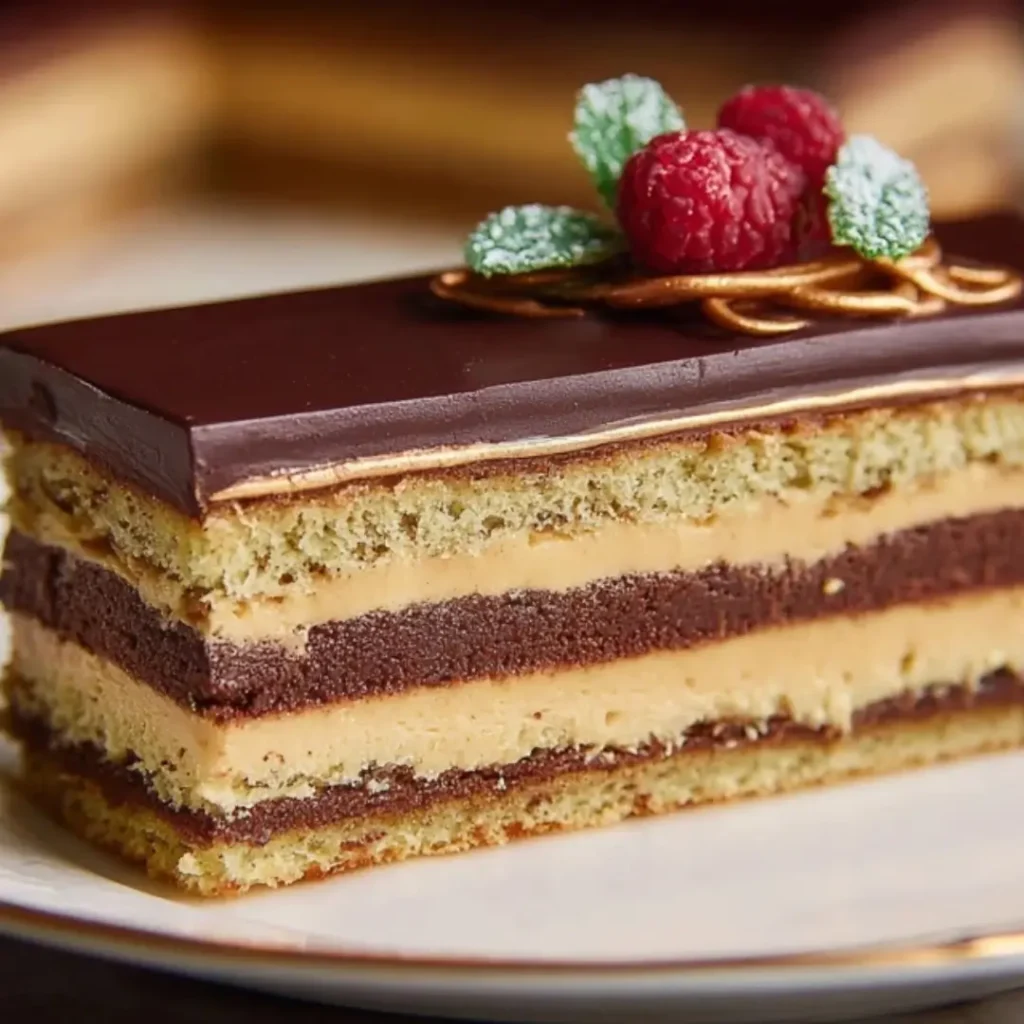
Oh, my sweet friends, there are some desserts that just whisper tales of elegance and indulgence, and the Classic French Opera Cake is surely one of them. This magnificent creation, with its layers of delicate almond sponge, rich coffee syrup, creamy buttercream, and decadent chocolate ganache, truly transforms humble ingredients into a symphony of flavors and textures. Every bite is a journey through subtle coffee notes and the luxurious melt of chocolate, making it a dessert that feels utterly magical when baked at home.
I remember the first time I attempted an Opera Cake; it felt like a grand adventure right in my tiny kitchen. My grandmother, ever the patient guide, would always say, “Sara, beautiful things take time, and a little love makes them even sweeter.” And she was so right! Each layer, meticulously prepared and assembled, became a testament to that loving patience, much like the cherished afternoons we spent together, flour dusting our aprons and laughter filling the air.
This recipe might seem ambitious, but I promise it’s incredibly rewarding, perfect for celebrating those special moments or simply elevating an ordinary day into something extraordinary. With its make-ahead potential, it’s also a fantastic stress-saver for entertaining. My top tip? Read through the entire recipe first, like a good book, before you even crack an egg – it makes all the difference!
What You Need to Make This Recipe
Crafting this stunning dessert is a delightful process involving several key players. We start with the delicate almond flour for our Joconde biscuit, the perfect light base for our Classic French Opera Cake. Rich instant espresso powder and dark chocolate bring the deep, comforting coffee and chocolate flavors, balanced beautifully by unsalted butter and eggs, which lend incredible richness and structure. For the full list of ingredients and precise measurements, you’ll find everything detailed in the recipe card below.
How to Make Opera Cake
Creating this elegant Opera Cake is a labor of love that unfolds in several beautiful stages. You’ll begin by preparing the light and airy Joconde biscuit, followed by a fragrant coffee syrup to imbue moisture and flavor. Next comes the luxurious French buttercream and a rich chocolate ganache, all building towards the grand assembly. Finally, a gleaming chocolate glaze crowns this masterpiece, making each step a truly satisfying part of the baking journey.
Classic French Opera Cake
Ingredients
Equipment
Method
- Preheat your oven to 400°F (200°C). Line an 18×13 inch baking sheet with parchment paper. Lightly grease the parchment.
- In a large bowl, combine almond flour, powdered sugar, and whole eggs. Beat with a stand mixer fitted with a whisk attachment on high speed for 5-7 minutes until light, fluffy, and tripled in volume.
- Gently fold in the sifted all-purpose flour, then the cooled melted butter until just combined. Be careful not to deflate the mixture.
- In a separate clean bowl, whip egg whites with granulated sugar until stiff peaks form.
- Gently fold one-third of the egg white mixture into the almond mixture to lighten it, then fold in the remaining egg whites until no streaks remain. Be very gentle.
- Evenly spread the batter onto the prepared baking sheet. Bake for 8-10 minutes, or until lightly golden and springs back when gently touched. Avoid overbaking.
- Immediately invert the biscuit onto a clean sheet of parchment paper or a wire rack, peel off the baking parchment. Let it cool completely. Once cool, trim the edges to form a neat rectangle and cut the biscuit into three equal 8×12 inch rectangles.
- In a small saucepan, combine water and granulated sugar. Bring to a simmer over medium heat, stirring until sugar dissolves. Remove from heat.
- Stir in the instant espresso powder until dissolved, then add the coffee liqueur (if using). Let cool completely.
- In a small saucepan, combine 1/2 cup granulated sugar and 1/4 cup water. Bring to a boil over medium heat, without stirring, until the syrup reaches 240°F (115°C) on a candy thermometer.
- While the syrup is heating, beat egg yolks in the bowl of a stand mixer on medium-high speed until light and thick.
- Once the sugar syrup reaches 240°F (115°C), immediately and carefully pour the hot syrup in a thin, steady stream into the beaten egg yolks with the mixer running on medium-low speed. Avoid hitting the whisk.
- Increase speed to high and continue beating for 8-10 minutes until the mixture is very thick, pale, and completely cooled to room temperature.
- Reduce speed to medium-low and add the room temperature butter, piece by piece, incorporating each piece before adding the next. The mixture may look curdled at first, but keep beating until it comes together and becomes smooth and creamy.
- Stir in the vanilla extract and dissolved espresso powder. Beat until combined and fluffy. Set aside.
- Place chopped dark chocolate in a heatproof bowl. In a small saucepan, heat heavy cream until it just begins to simmer. Pour the hot cream over the chocolate.
- Let stand for 5 minutes, then whisk gently from the center outwards until smooth and glossy. Let cool at room temperature until it thickens to a spreadable consistency (about 30-60 minutes).
- Place one joconde biscuit layer on your serving platter or a flat board. Brush generously with coffee syrup until well moistened.
- Spread half of the coffee buttercream evenly over the biscuit layer.
- Carefully place the second joconde biscuit layer on top. Brush generously with coffee syrup.
- Spread the chocolate ganache evenly over the second biscuit layer.
- Place the third joconde biscuit layer on top. Brush generously with coffee syrup.
- Spread the remaining coffee buttercream evenly over the third biscuit layer. Chill the cake in the refrigerator for at least 1 hour to firm up the layers.
- Place chopped dark chocolate, butter, and neutral oil in a heatproof bowl set over a saucepan of simmering water (bain-marie). Stir occasionally until completely melted and smooth.
- Remove from heat and let cool slightly until it’s lukewarm but still pourable. The ideal temperature is around 90-95°F (32-35°C).
- Remove the chilled cake from the refrigerator. If using a cake frame, remove it now. Place the cake on a wire rack set over a tray to catch drips.
- Pour the lukewarm chocolate glaze over the entire cake, spreading quickly and evenly with an offset spatula to cover the top and sides. Let excess drip off.
- Carefully transfer the cake to a clean serving platter. Chill for at least 3-4 hours, or preferably overnight, for the glaze to set completely and for the flavors to meld.
- Before serving, trim the edges again for a very clean presentation. Decorate with a stencil and cocoa powder, or a small chocolate ‘Opera’ inscription if desired.
Notes
Pro Tips for Making This Opera Cake
When I set out to make an Opera Cake, I always have a few little secrets up my sleeve to ensure it turns out perfectly, like a cherished memory from my kitchen.
- My Secret Trick: When preparing the Joconde biscuit, I always make sure my eggs are at room temperature. This helps them whip up to their fullest volume, giving you that wonderfully light and airy texture that is the hallmark of a truly great Opera Cake. It’s a small step, but it makes such a difference!
- Take your time with each layer. French baking is all about precision and patience. Don’t rush the cooling times between layers; this ensures clean cuts and a beautifully structured cake.
- For the coffee syrup, make sure your instant espresso powder is truly dissolved. I like to stir it well into the warm water and sugar until there are no granules left, ensuring an even and intense coffee flavor throughout.
- Achieving the perfect chocolate glaze is key. I always make sure my glaze is at the right temperature before pouring – too hot, and it will run off; too cool, and it won’t spread smoothly. A quick check with a thermometer can save the day!
Fun Variations for Opera Cake
One of the joys of baking is letting your creativity shine through, and this stunning Opera Cake is wonderfully adaptable. Here are a few ways I’ve seen bakers, and even my own friends, put their unique spin on this classic:
- Hazelnut Dream: Instead of solely almond flour for the Joconde biscuit, try a mix of almond and finely ground hazelnuts. The subtle nutty flavor complements the coffee and chocolate beautifully. My sister, Clara, loves when I make it this way; she says it reminds her of her favorite pralines!
- Orange Zest Brightness: Infuse your coffee syrup with a bit of orange zest for a bright, citrusy counterpoint to the rich flavors. Just a teaspoon or two steeped in the warm syrup adds a lovely aroma and subtle tang. It’s a delightful twist, especially during colder months.
- Liqueur Swap: While coffee liqueur is traditional, consider experimenting with other liqueurs in your coffee syrup or even a touch in the buttercream. A hint of Grand Marnier or a rich rum could add another layer of sophisticated flavor. A friend of mine once used a dash of amaretto, and it was simply divine.
What to Serve With Opera Cake
This elegant Opera Cake is a showstopper on its own, but a few thoughtful accompaniments can elevate the experience even further. I love to think of it as creating a complete dessert moment, just like my grandmother used to do.
A simple cup of freshly brewed coffee or a robust espresso is the classic companion, mirroring the cake’s own deep coffee notes. For those who prefer tea, a delicate Earl Grey or a soothing chamomile provides a lovely contrast. If you’re feeling a little extra indulgent, a small scoop of good quality vanilla bean ice cream or a dollop of unsweetened whipped cream on the side adds a wonderful creamy texture that melts beautifully with each bite. My mom always paired her rich desserts with a glass of milk, a simple pleasure that still brings a smile to my face. For a quick serving idea, a few fresh raspberries or a light dusting of cocoa powder can add a touch of color and freshness.
How to Store Opera Cake
After all that effort, you want your delicious Opera Cake to stay as fresh and delightful as possible! Proper storage is key to preserving its delicate layers and rich flavors, ensuring every slice is a treat.
- Refrigerator Storage: The Opera Cake, with its buttercream and ganache, should always be stored in the refrigerator. Place it in an airtight container to prevent it from absorbing any other fridge odors and to keep the layers moist. It will keep beautifully for up to 3-4 days. I always like to store cakes in airtight containers because I’ve learned from experience that nothing ruins a beautiful dessert faster than it drying out or picking up a funny smell!
- Freezer Storage: For longer storage, you can freeze individual slices or the whole cake (if well wrapped). Wrap the cake tightly in plastic wrap, then an additional layer of aluminum foil. It can be frozen for up to 1 month. To serve, thaw it overnight in the refrigerator.
- Serving Tips: Before serving, always allow the Opera Cake to come to room temperature for about 15-20 minutes. This lets the buttercream and ganache soften slightly, enhancing their creamy texture and allowing the complex flavors to truly shine.
Nutritional Benefits
While the Classic French Opera Cake is undoubtedly an indulgent treat, it also boasts a few interesting nutritional notes. The almond flour in our Joconde biscuit contributes healthy fats and a good dose of protein, offering a more wholesome base than traditional flour. Dark chocolate, a key component, is known for its antioxidants. It’s a wonderful example of how, with a little love and the right ingredients, we can create a dessert that’s both satisfying and a delightful celebration of simple goodness.
FAQs
Faq 1
Can I make parts of the Opera Cake ahead of time?
Absolutely! The Joconde biscuit layers can be baked and frozen, and both the coffee syrup and chocolate ganache can be made a day or two in advance and stored in the refrigerator. This modular approach makes assembling your beautiful Opera Cake much more manageable on the big day.
Faq 2
What if my buttercream curdles?
Don’t panic! This sometimes happens if the temperatures aren’t quite right. Keep beating it. Often, continuing to whip the mixture will bring it back together into a smooth, emulsified consistency. Just be patient; it’s a common occurrence that can almost always be fixed with a little more mixing for your Opera Cake.
Faq 3
How important is precise layering for this cake?
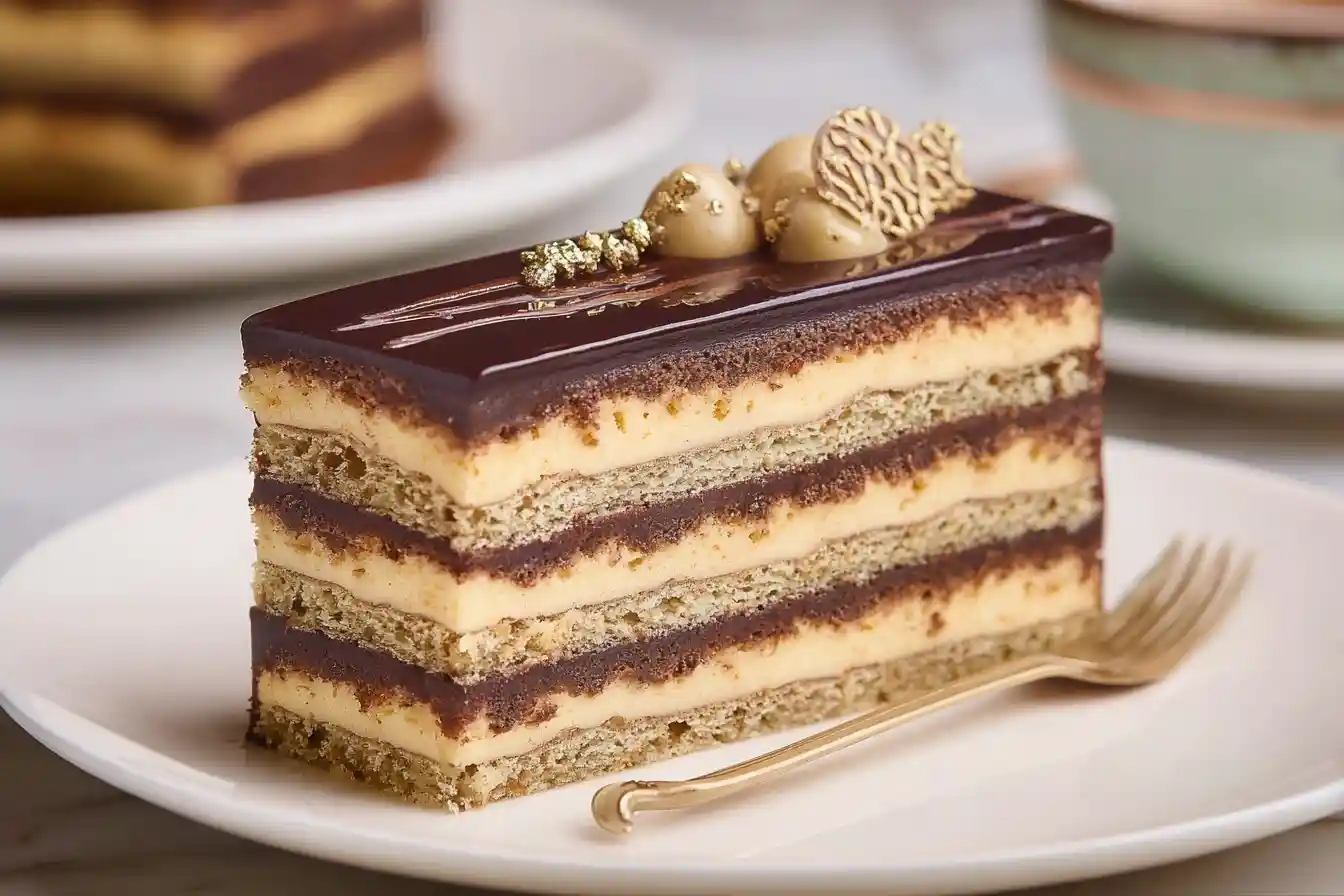
Precise layering is quite important for the classic look and balanced flavors of an Opera Cake. Taking the time to trim your biscuit layers and spread each component evenly ensures every slice has that iconic, beautiful striped appearance and a harmonious blend of textures and tastes.
Faq 4
Can I use decaf espresso for the coffee syrup?
Yes, you can certainly use decaf instant espresso powder for the coffee syrup if you prefer to avoid caffeine. The flavor profile will remain largely the same, ensuring you still get that wonderful coffee essence throughout your Opera Cake without the jolt.
Conclusion
Baking a Classic French Opera Cake is more than just following a recipe; it’s an act of love, a journey of patience, and a triumph of flavor. From the delicate almond sponge to the rich coffee and chocolate layers, each component comes together to create a dessert that’s truly unforgettable. I hope you feel inspired to bring this elegant masterpiece into your kitchen, not just for the incredible taste, but for the joy it brings and the beautiful memories you’ll create. Happy baking, my sweet friends!